

An ethical AI art generator is a tool that creates digital artwork using artificial intelligence while respecting artists’ rights, data ownership, and user trust. Unlike traditional AI models that scrape massive datasets without consent, ethical systems aim to ensure fairness, transparency, and accountability.
But what makes an AI art generator truly ethical? Let’s break it down with real-world examples, research insights, and industry debates.
What Is an Ethical AI Art Generator?
Quick Answer: An ethical AI art generator is a digital tool that produces AI-generated art while following principles of consent, copyright respect, transparency, and fairness.
- It ensures that datasets like LAION-5B are sourced responsibly.
- It addresses issues raised by artists about copyright and ownership.
- It balances creativity with the ethical implications of generative AI.
In short, it’s not just about making beautiful images—it’s about making art responsibly.
The Rise of AI-Generated Art
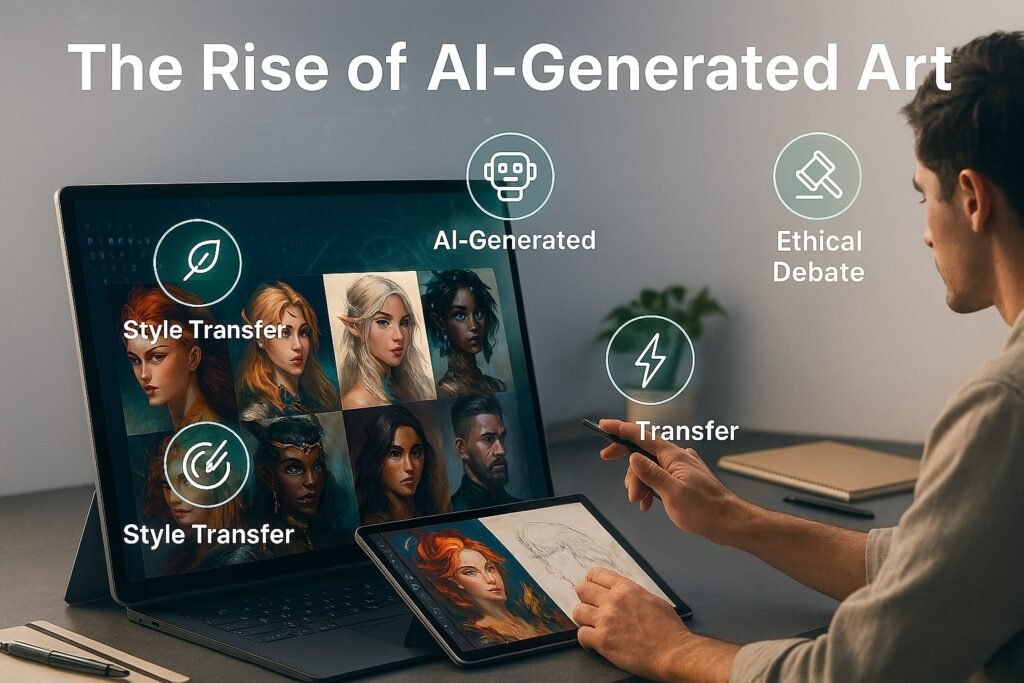
AI-generated art exploded in popularity with apps like Lensa, powered by Stable Diffusion, which create stylized avatars and digital portraits in seconds.
- Lensa became a viral sensation, offering style transfer that transformed selfies into fantasy characters.
- These models rely on massive datasets such as LAION-5B, which include billions of images scraped from the internet.
- The problem? Many artists argue their copyrighted works were used without consent.
This controversy sparked global discussions around AI, creativity, and ethics.
Key Ethical Concerns in AI Art
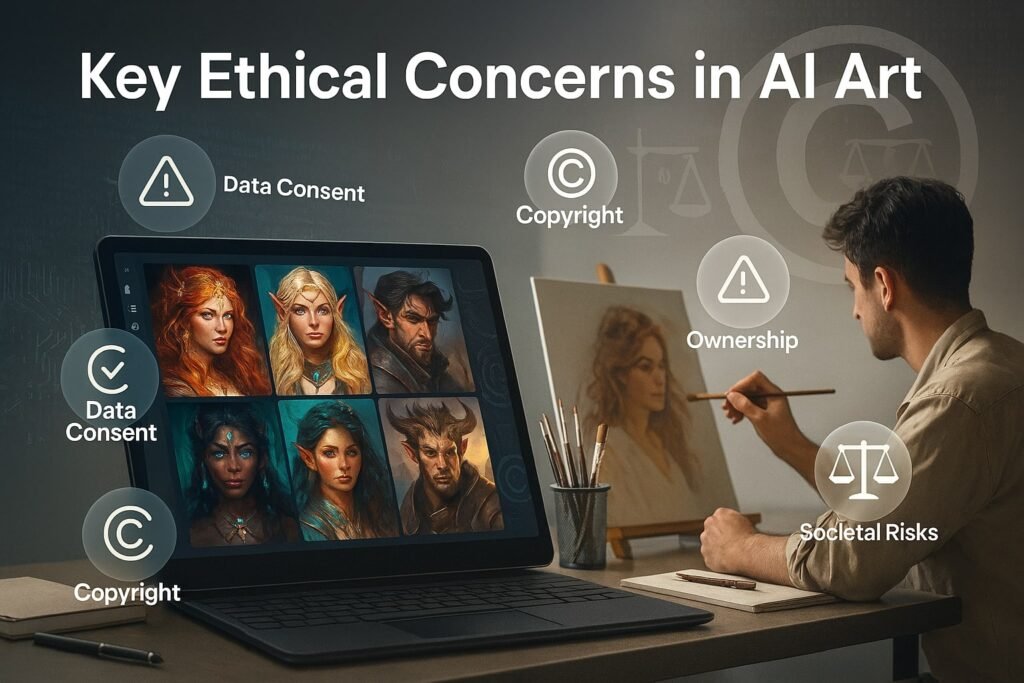
The main ethical issues are data consent, copyright infringement, fairness, and societal risks.
1. Data Consent
- Stable Diffusion and similar models trained on the LAION-5B dataset include copyrighted works, stock photos, and even personal images.
- Artists argue this violates their intellectual property rights.
2. Copyright and Ownership
- Can AI-generated art be copyrighted?
- If style transfer mimics a human artist’s work, who owns the result—the user, the model creator, or the original artist?
3. Societal Risks
- As Bhuman Vyas highlighted in his research, generative AI can amplify issues of surveillance capitalism, disinformation, and mass manipulation.
Real-Life Examples: The Lensa Controversy
Quick Answer: Lensa showed both the promise and pitfalls of AI art.
- What People Liked: Quick, fun, and affordable digital portraits.
- What Went Wrong: Many discovered AI avatars resembled styles of living artists without credit or payment.
This case study illustrates the tension between innovation and ethics in AI-generated art.
Strengths of Ethical AI Art Generators
When done right, ethical AI art tools bring major benefits.
- Respect for artists and copyright.
- Clear dataset transparency (no hidden scraping).
- Users retain ownership of their creations.
- Promotes fair compensation models (royalties, opt-in datasets).
- Encourages trust and broader adoption.
Areas for Improvement
Quick Answer: Ethical AI art is still evolving.
- Lack of global standards on copyright in AI art.
- Limited artist participation in dataset creation.
- Risk of bias in training data (gender, race, culture).
- Inconsistent policies across different AI platforms.
Ethical AI vs. Traditional AI Generators
Quick Answer: Ethical AI prioritizes consent and transparency, while traditional tools often cut corners.
| Feature | Ethical AI Art Generator | Traditional AI Art Generator |
| Dataset | Curated with consent | Scraped from the internet |
| Artist Rights | Protected with opt-in systems | Often ignored |
| Ownership | User-centric | Ambiguous |
| Transparency | Clear documentation | Limited or hidden |
| Trustworthiness | High | Questionable |
The Role of Style Transfer in Ethical AI
Quick Answer: Style transfer is powerful but controversial—it lets AI apply artistic styles to photos.
- Used in Lensa, it made avatars look like hand-painted illustrations.
- Ethical systems should ensure that artists’ styles are not mimicked without consent.
Scholarly Insight: Bhuman Vyas on AI Art Ethics
Quick Answer: Academic research supports stronger ethical frameworks.
- Bhuman Vyas highlights the risks of AI art in surveillance capitalism and mass manipulation.
- He calls for greater accountability and regulation.
- His research adds credibility to the argument for ethical AI art generators.
FAQ: Ethical AI Art Generators
Q1. What makes an AI art generator ethical?
Consent-based datasets, copyright respect, and transparent ownership rules.
Q2. Is Lensa an ethical AI art generator?
Partially—it’s popular but criticized for using LAION-5B, which includes non-consensual data.
Q3. Can AI-generated art be copyrighted?
In most jurisdictions, AI-generated works alone can’t be copyrighted unless there’s significant human input.
Q4. How do artists benefit from ethical AI?
They gain credit, royalties, and protection against unauthorized style copying.
Q5. What risks come with unethical AI art?
Copyright theft, misinformation, bias, and reduced trust in digital media.
Q6. Is style transfer ethical?
Yes, if used with consent. No, if it imitates a living artist’s unique style without permission.
Q7. How can I identify an ethical AI art generator?
Check if it provides dataset transparency, copyright respect, and clear user ownership policies.
Conclusion
An ethical AI art generator is not just a technical tool—it’s a cultural and social responsibility. By ensuring consent, fairness, and transparency, these tools can empower creativity without exploiting artists.
As the debate continues, the future of AI-generated art will depend on striking a balance between innovation and ethics.
Author Bio
Written by [Your Name], a researcher and writer specializing in AI ethics, digital creativity, and technology policy. With a background in media studies and hands-on experience with AI tools, they bring a balanced perspective on the promises and pitfalls of generative AI.
References
- Vyas, Bhuman. Ethical Implications of Generative AI in Art and Media. (2022).
- Stability AI. Stable Diffusion Documentation.
- LAION. LAION-5B Dataset Overview.
- Prisma Labs. Lensa AI: Official Website.
- Scholarly articles on AI copyright and style transfer.
