
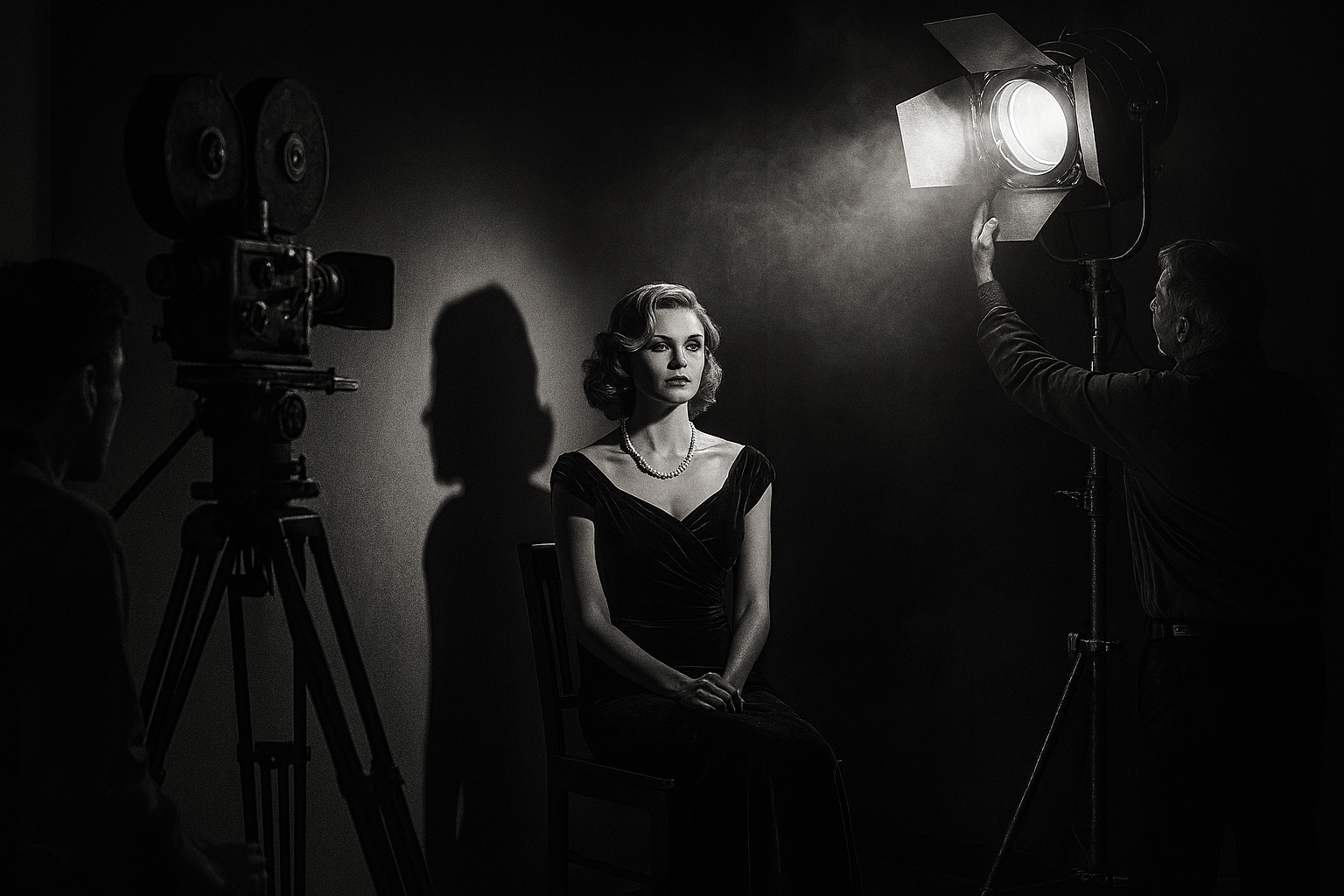
Film noir cinematography is a unique style from the 1940s and 1950s. It uses dark lighting, strong shadows, and unusual camera angles. This style was influenced by German Expressionism. It gives movies a moody and tense feeling.
Defining Characteristics of Film Noir Cinematography
1. Chiaroscuro Lighting
Film noir often uses chiaroscuro lighting. This means strong contrasts between light and dark. The technique makes scenes look dramatic and adds feelings of mystery and tension. Shadows and bright spots show characters’ hidden sides.
2. Unusual Camera Angles
Low-angle, high-angle, and tilted shots are common in film noir. These angles can make viewers feel uneasy. They show characters’ emotions or make the world seem twisted and unstable.
3. Shadows and Reflections
Shadows are very important. They often hint at secrets or dark traits of characters. Venetian blinds or mirror reflections create depth and mood in scenes.
4. Night-for-Night Shooting
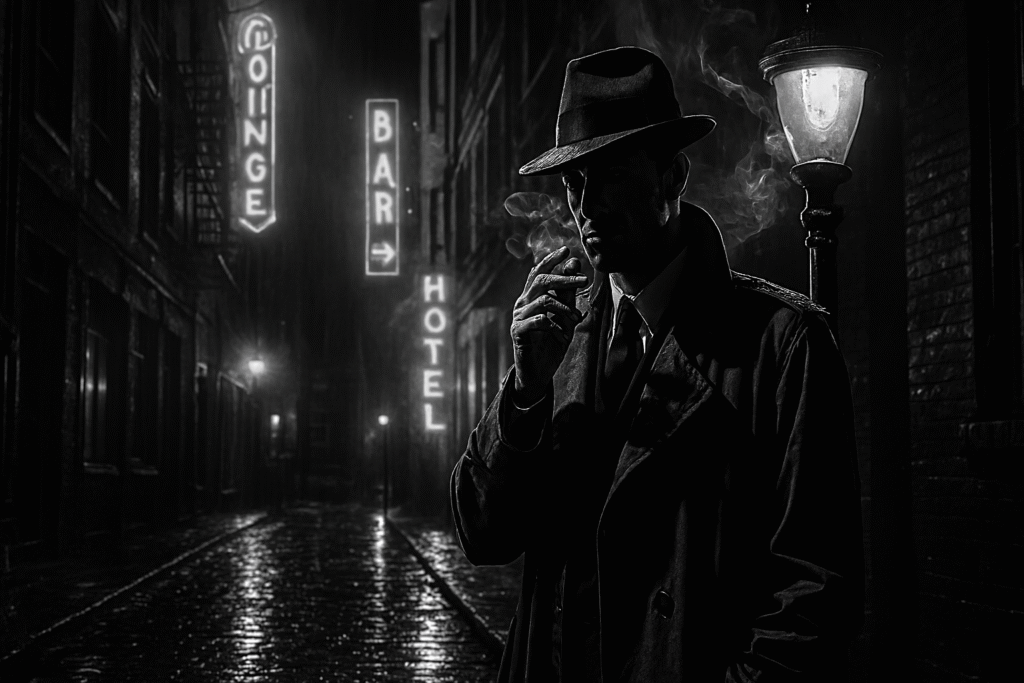
Film noir often films scenes at night instead of faking night during the day. Real nighttime shots give a more genuine, moody feel to the movie.
5. Real Locations
Filmmakers often shoot in real urban places. This gives films a realistic look and shows gritty, sometimes corrupt, settings that fit noir stories.
Influence of the 1940s–1950s
Film noir reflects the 1940s and 1950s society. After World War II, uncertainty and changing families influenced stories. Flashbacks and non-linear storytelling became common.
Notable Examples and Cinematographers
- Touch of Evil (1958) – Directed by Orson Welles. Famous for its long opening shot, low angles, and deep focus.
- The Godfather Trilogy – Gordon Willis, called the “Prince of Darkness,” used strong shadows and high-contrast lighting to build suspense.
- Nightmare Alley (2021) – Directed by Guillermo del Toro. Uses chiaroscuro lighting and dark, atmospheric settings as a nod to classic noir.
Key Film Noir Cinematography Features
| Feature | Description | Purpose / Effect | Example |
|---|---|---|---|
| Chiaroscuro Lighting | Strong contrast between light and dark | Creates mood, suspense, and highlights moral ambiguity | The Big Sleep (1946) |
| Camera Angles | Low-angle, high-angle, Dutch tilt shots | Conveys disorientation, psychological tension | Touch of Evil (1958) |
| Shadows & Reflections | Use of Venetian blinds, mirrors, and patterned shadows | Symbolizes hidden motives, inner conflict | Double Indemnity (1944) |
| Night-for-Night Shooting | Filming scenes during actual night | Enhances realism and atmospheric tension | The Third Man (1949) |
| Non-linear Storytelling / Flashbacks | Fragmented timelines and memory-based scenes | Builds suspense and complexity in the narrative | Out of the Past (1947) |
| Protagonist / Male Lead | Morally ambiguous or flawed character | Drives the story and engages viewers | Sam Spade in The Maltese Falcon (1941) |
| Femme Fatale | Manipulative female character | Creates conflict, drives plot, introduces danger | Phyllis Dietrichson in Double Indemnity (1944) |
| 1940s–1950s Era Influence | Historical and cultural context post-WWII | Shapes story structure and visual style | Most classic noir films of the era |
Frequently Asked Questions (FAQ)
1. What is film noir cinematography?
Film noir cinematography is a visual style in movies from the 1940s–1950s that uses low-key lighting, deep shadows, unusual camera angles, and real-world locations to create suspense, moral ambiguity, and a moody atmosphere.
2. What are the key features of film noir cinematography?
The main features include:
- Chiaroscuro (high contrast) lighting
- Low-angle, high-angle, and Dutch tilt shots
- Shadows and reflections for storytelling
- Night-for-night shooting
- Urban, real-world locations
3. How does film noir use non-linear storytelling?
Film noir often uses flashbacks and fragmented timelines to tell its story. This non-linear storytelling reveals plot twists gradually, keeping viewers engaged and creating suspense.
4. Who are typical characters in film noir?
The main characters often include:
- A protagonist or male lead, who is morally flawed or conflicted
- A femme fatale, a manipulative woman who drives the plot and creates tension
5. Why is the 1940s–1950s era important for film noir?
This era reflects post-WWII social changes, uncertainty, and evolving cultural norms. The historical context influenced both the narrative structure and visual style of classic noir films.
6. Can modern films use film noir cinematography?
Yes, modern films like Nightmare Alley and Sin City use film noir techniques such as chiaroscuro lighting, dramatic shadows, and urban settings to evoke the same moody and suspenseful feel.
7. How do shadows and reflections enhance a film noir story?
Shadows and reflections symbolize hidden motives, moral ambiguity, or danger. Techniques like Venetian blinds casting stripes or mirror reflections add depth, tension, and a visual representation of characters’ inner conflict.
Conclusion
Film noir cinematography tells complex stories through visual style. Chiaroscuro lighting, unusual angles, and symbolic shadows create suspense and drama. These techniques make the world of film noir striking and memorable.Want to grow your business faster? 👉 Click here and start your success journey today.
Author Bio: Ariful] is a film historian and cinematography expert with 15+ years of experience. They write about classic and modern films and explore visual storytelling techniques in iconic genres.
References:
- Wikipedia
- Filmmakers Academy
- heartofnoir.com
- Vanity Fair
